
Sleep Hygiene That Actually Moves the Needle
Most sleep tips are noise. A regular schedule, light timing, a cool room, and a few evening rules move sleep more than any gadget.
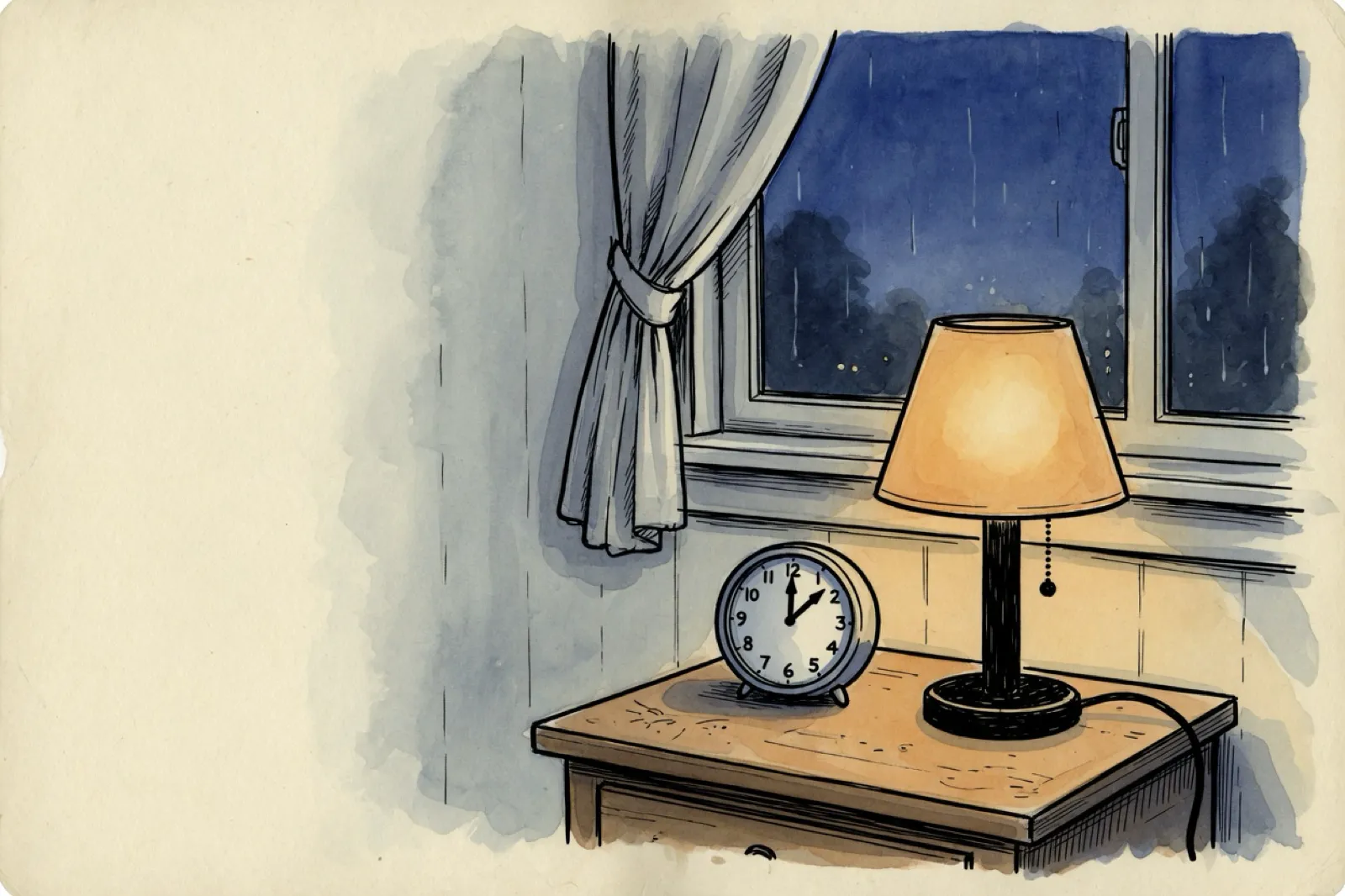
Sleep advice is everywhere and most of it is soft. Avoid screens, try a bedtime routine, buy a better mattress. Some of that helps a little. Most of it skips the inputs that shape sleep: when you go to bed, when light hits your eyes, how cool the room is, and what you put in your body in the hours before lights out.
I’ve been listening closely to Andrew Huberman and Matthew Walker on this. What I took away is a short list of levers with real physiology behind them, and not one of them is a pillow.
Same clock every day
The rule with the biggest payoff is also the most boring. Keep a consistent sleep and wake time, weekends included.
Your circadian system runs on expectation. When bedtime and wake time swing by hours, you give yourself a mini jet lag without leaving your city. Walker and others put regularity near the top of the list for a reason. You can have a decent mattress and still feel wrecked if your schedule is chaos.
I aim for a wake window I can hold most days, then back into bedtime from there. Perfect is not the goal. A 30 to 60 minute drift is a different animal from Friday at 2am and Sunday at 11pm.
Light
Light is the main time cue for the brain.
Get outdoor light soon after waking. That morning signal helps set your alertness now and the timing of your melatonin later. Clouds still count, you just need longer outside. A window is a weak substitute. It is the same free habit I’ve written about before, and it pairs with everything below.
In the evening, dim the environment for the hour before bed. A rough target is cutting ambient light by about half compared with daytime levels. Bright overhead LEDs and a phone at full blast tell your brain it is still day, and melatonin gets pushed back. Warm, low lamps beat a lit-up living room. Blue-light glasses are optional. Dimming the room is not.
If you only change two things this month, make them your schedule and your light timing.
A cool room, empty bed when you’re stuck
Core body temperature has to drop a bit for you to fall asleep and stay asleep. A bedroom around 67°F / 18.5°C is a common target in sleep research. Too warm and you toss. Too cold and you wake up fighting the blankets. Find the cool side of comfortable.
If you’ve been lying awake for 20 to 25 minutes, get out of bed. Sit somewhere dim and do something low-stimulation until sleepiness comes back. Staying in bed while frustrated trains your brain to treat the mattress as a place to worry. This is classic sleep-restriction advice, and it still works when anxiety or scrolling has turned the bed into a stage.
Alcohol, food, caffeine, cannabis
These are the four that sabotage an otherwise fine night.
Alcohol near bedtime can make you fall asleep faster and still wreck the quality of the night. It fragments sleep and suppresses REM. “I slept because I had a drink” usually describes sedation rather than good sleep architecture. Leave a real gap, and skip it on nights that matter.
Give yourself a 2 to 3 hour gap between your last substantial meal and bed. Lying down full is a recipe for reflux and lighter sleep. A small snack when you’re truly hungry is a different thing from dinner and dessert at 10pm.
Caffeine has a long half-life for many people. If you think you’re fine with coffee at 4pm, you’ve probably never compared that against a clean taper. The Huberman-style guidance I actually use is to front-load caffeine earlier in the day and cut it off by early afternoon. If your sleep is fragile, move the cutoff earlier and retest for a week.
THC can help some people fall asleep and still suppress REM. Regular use plus withdrawal is a common path to rebound insomnia. CBD is murkier, with less clear benefit, a less clear harm profile at sleep doses, and product quality that varies. I wouldn’t build a sleep plan around either one without knowing what I was trading away.
Cooling pads and pink noise
There is real research on thermal management (cooling mattress pads, warm extremities then a cool core) and on auditory tools (pink noise, certain soundscapes) that may deepen parts of sleep for some people. Treat those as experiments once the basics are in place, not as the entry ticket.
You do not need a $3,000 sleep stack to fix a chaotic schedule and a bright bedroom. Buy hardware after you own the free levers.
What I’d actually do
Here is the stack I try to run before I blame genetics or buy another gadget.
The anchor is the same wake time most days, protected even when bedtime slips. Fix wake time first and bedtime tends to follow. Then get outdoor light within an hour of waking, five to ten minutes if it’s clear and longer if it’s cloudy, and skip the sunglasses for that short window when it’s safe to.
The evening runs in reverse. Dim the lights about 60 minutes before bed, roughly half the brightness, warm lamps instead of overheads, phone brightness down or the phone away entirely. Keep the bedroom cool, around 67°F, plus dark and quiet, which beats expensive bedding upgrades. If I’m still awake after 20 to 25 minutes, I get out of bed, sit in a dim room, do something boring, and go back when I’m sleepy. Lying there frustrated only makes the bed feel worse.
The intake rules are the same every night. No alcohol as a sleep aid, and definitely none within a few hours of bed on nights I care about. Dinner finished 2 to 3 hours before lights out, with late eating kept rare. Caffeine early with a cutoff by early afternoon, moved earlier if I’m still waking at 3am wired. No THC for sleep unless I’ve weighed the REM tradeoff, and no assuming CBD is a free upgrade.
Huberman’s long conversation with Matthew Walker is the clearest walkthrough of this territory I know of (YouTube). Use it for depth.
If sleep is chronically broken, none of these habits replace a medical evaluation for apnea, restless legs, mood disorders, or other causes. For most people who are just not sleeping well, everything above is where the return is.
Sources
- Huberman, A., & Walker, M. Discussion of sleep hygiene, circadian timing, temperature, alcohol, caffeine, and related topics on the Huberman Lab podcast.
- Walker, M. Why We Sleep (sleeplessness, alcohol and REM, sleep regularity, and behavioral sleep practices summarized in public lectures and writing).
- Circadian light and SCN entrainment: see also Wright et al. and related work discussed in the morning sunlight post on this site.