
Epigenetic Age Kits Are Noisy
Consumer epigenetic age kits are noisy, disagree with each other, and often sit next to the supplements they justify. Treat the number as a curiosity.
Consumer “biological age” tests are everywhere in the longevity world now. You spit or prick a finger, get a number lower than your birthday, post the screenshot, and feel like science is on your side.
Measure whatever you want. The trouble starts when one noisy number gets treated like a medical fact.
The best public reality check I’ve seen, as of late 2024, comes from Dr. Matt Kaeberlein on the Optispan podcast. He ran the kits himself and checked whether they agreed with each other.
Eight kits, same day
Kaeberlein reported running eight kits from four companies (TruDiagnostic, Elysium, Tally Health, and DoNotAge) with samples collected on the same day under the same conditions. If these products were measuring something stable in the body, you’d expect rough agreement.
He did not get rough agreement.
Results varied widely across companies, and worse, within the same company on the same sample. Run the same test twice on the same material and the gap between the two answers tells you how much of the number is real. In one case he described two readings almost 13 years apart from the same test. A decade of life, from one sample.
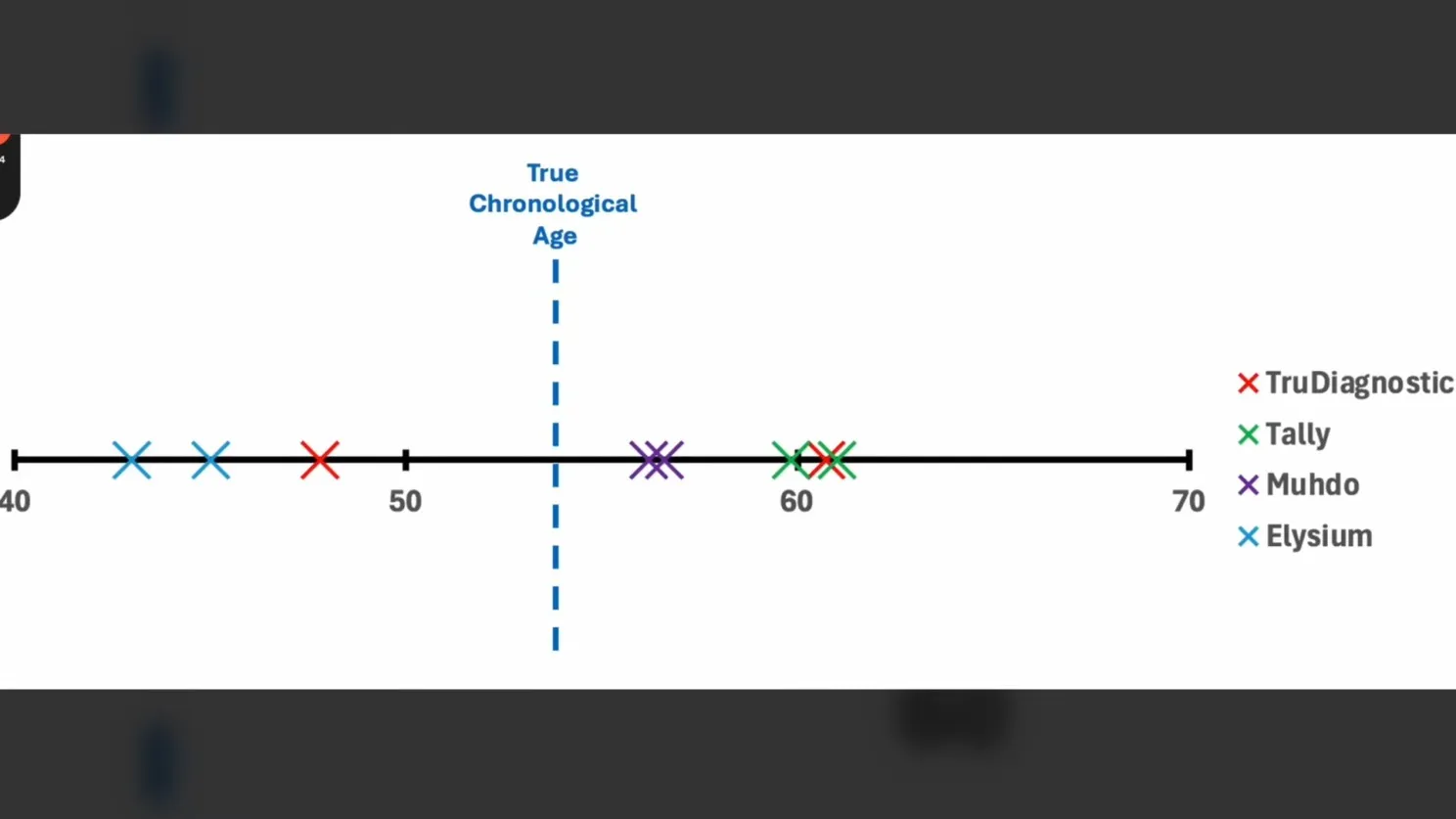
From the podcast discussion: same person, same time window, different kits, and a wide spread of answers.
Tricking the testers
Noise is one problem. Bias is another.
To see whether the age a customer claims might influence the result, Kaeberlein described submitting samples under the fake name “Johnny Optispan” to Elysium and TruDiagnostic, with a claimed age of about 33.5 while his true age was about 53.5.
As he reported it, Elysium stayed fairly consistent with its other reading for the same biological sample. TruDiagnostic came back about 13 years younger in the “Johnny” case, which is a large swing on what should have been the same material.
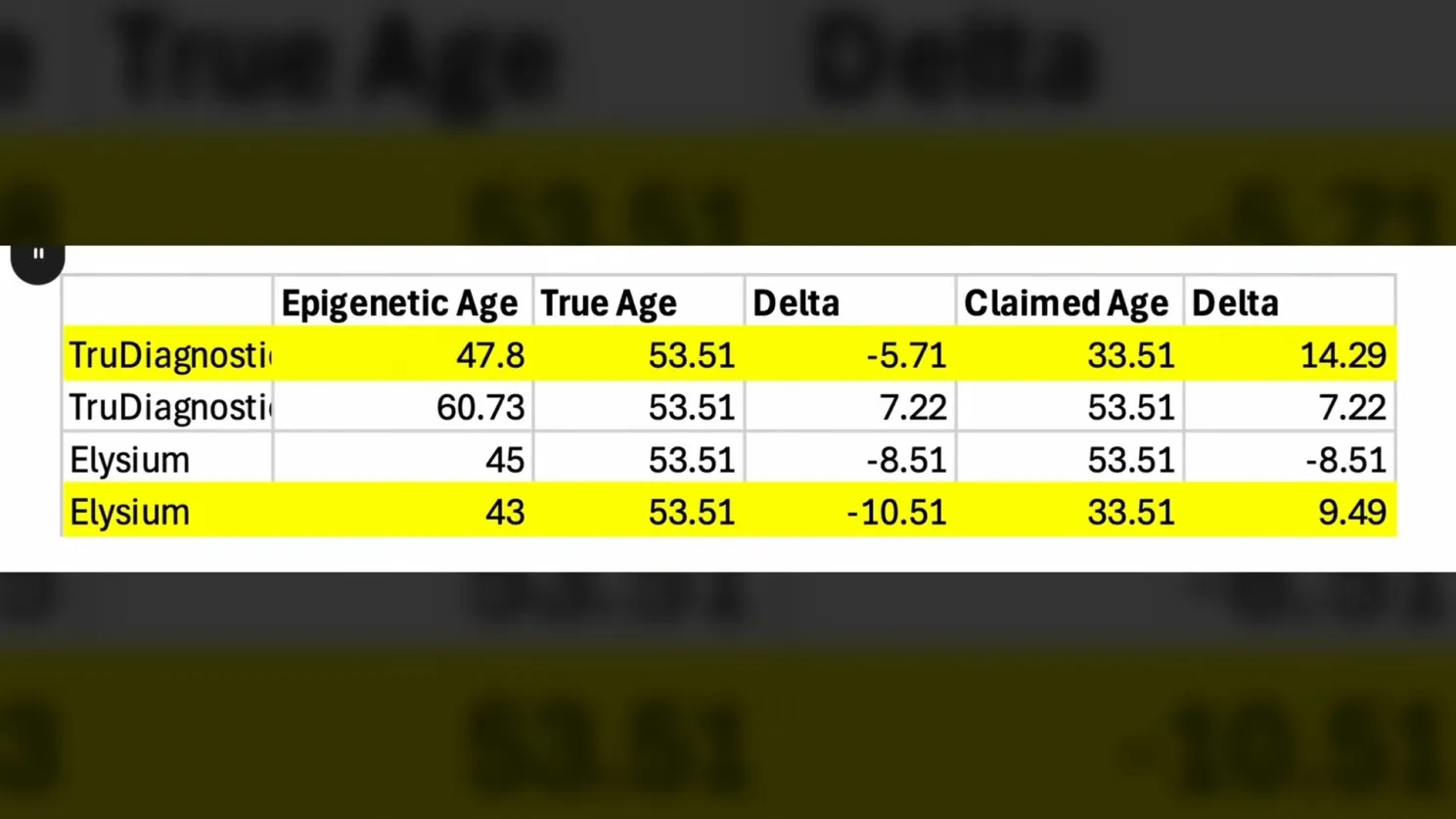
Also from the podcast: the same samples submitted with different claimed ages, and a different story depending on the kit.
I didn’t run this lab work myself. I’m taking Kaeberlein’s reported experiment seriously as a consumer stress test, and it should make anyone pause before rearranging their life around a single kit result.
They also sell the fix
Many of these companies also sell supplements and other “anti-aging” products. The test doubles as the sales funnel. Your number comes back high, so here’s a stack. Retest later, celebrate the delta, renew the subscription.
None of that proves any particular result is rigged. It does mean the incentives are messy. When one company both scores your “biological age” and sells you the fix, ask harder questions about methods, replication, and quality control. What I want to see is a published method and a number that repeats.
Motivation and stress
I can be skeptical without throwing the whole category out.
Kaeberlein also said (and I agree) that these kits could still motivate people. Some people need a scoreboard. If a flashy number finally gets someone to sleep, lift, walk, and stop drinking every night, that behavior change is real even if the clock is noisy.
The stress cuts the other way. A bad result can leave you anxious, and chronic stress is not free. If a test has you obsessing or buying supplements out of fear, it may hurt more than it helps, however glowing the marketing looks.
So my view, as of late 2024, is that these are a fun curiosity for some people and a bad basis for medical decisions or for how you see yourself.
One piece of aging
Even if these clocks were perfectly precise tomorrow, they would still cover one piece of a much larger process. Epigenetic change is usually counted as one of the dozen or so hallmarks of aging. Plenty of correlation, incomplete mechanism, nowhere near the whole story.
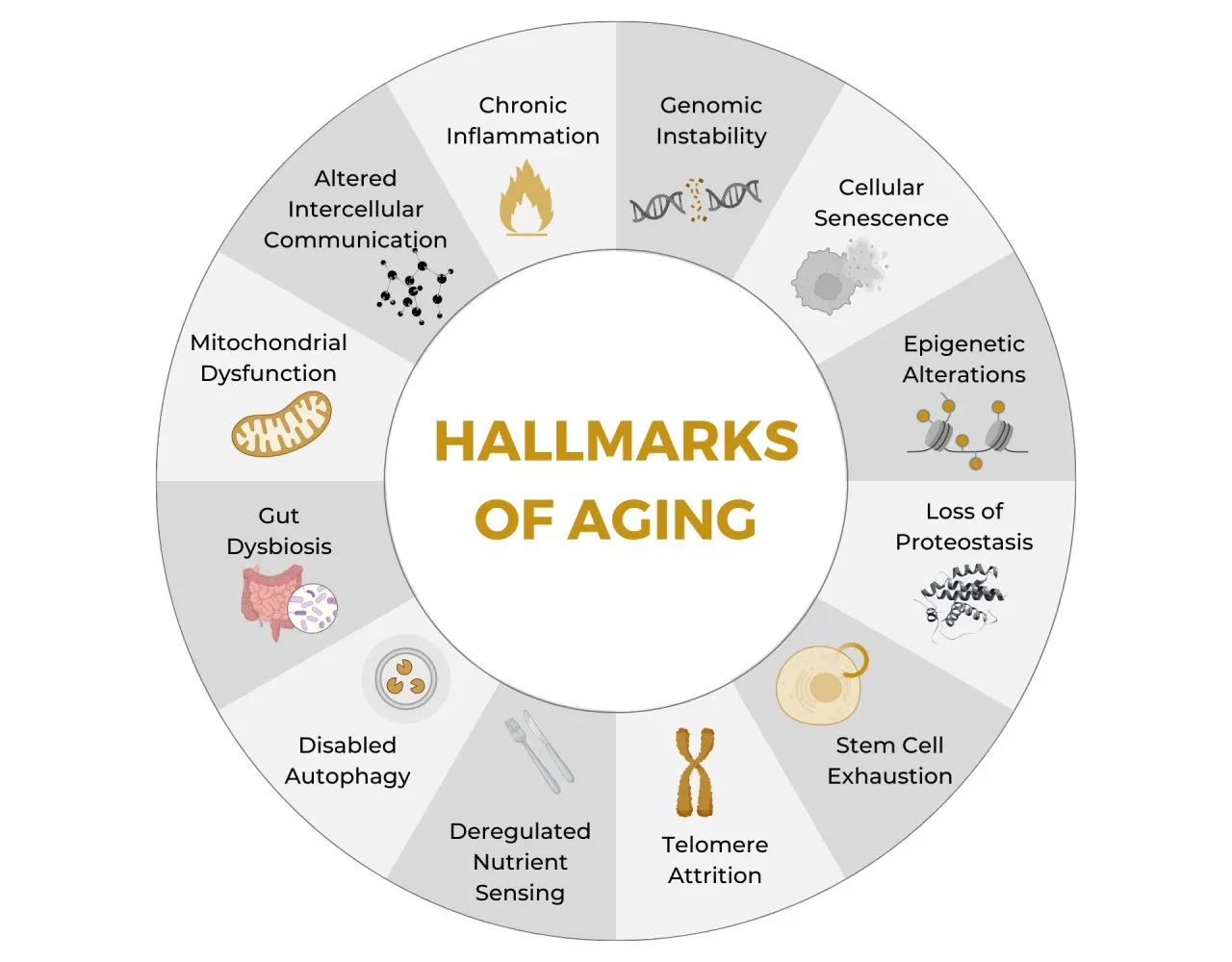
The hallmarks of aging. Epigenetic change is one spoke on the wheel.
Lifestyle, environment, genetics, inflammation, mitochondrial function, strength, and metabolic health all matter too. Obsessing over epigenetic age crowds out the boring variables that move how you feel and perform.
This is also why I side-eye influencer “I reverse-aged 8 years” content. If the same kit can spit out different numbers on the same day, selective posting is almost inevitable. The flattering result gets the carousel. The ugly retest does not.
What I’d actually do
If you’re curious, buy a kit. Just hold the result loosely. What you’re getting back is a reading of your DNA methylation pattern at one moment, run through an algorithm you can’t inspect. Treat it like a weather forecast for a month from now, interesting and often wrong.
That means it isn’t a diagnosis, and you can’t use it to check whether a supplement stack worked. The improvement you’d be celebrating could be the same noise that put 13 years between two runs of one test, sold to you by the company that sold you the stack. It also says nothing about how you feel and function day to day, which is the part you can actually check.
So ask the boring questions instead. How is your energy? Your strength, your sleep, your mood? Blood pressure, lipids, glucose control, fitness, recovery? Can you play with your kids without getting winded? Those answers are messy in their own way, but they track much closer to a life worth living.
Eating well, training consistently, managing stress, and sleeping enough still beat a dashboard full of shaky clocks. The research behind these clocks is interesting. The kits you can buy, as of late 2024, are not good enough to run your life on.
Sources
- Kaeberlein, M. Discussion of consumer epigenetic age testing kits on the Optispan podcast (2024). Primary source for the multi-kit and “Johnny Optispan” comparisons summarized above.