
Rockefeller, Flexner, and the Shape of American Medicine
Early 20th-century philanthropy and the Flexner Report professionalized U.S. medicine. The gains were real. So was the tilt away from prevention.
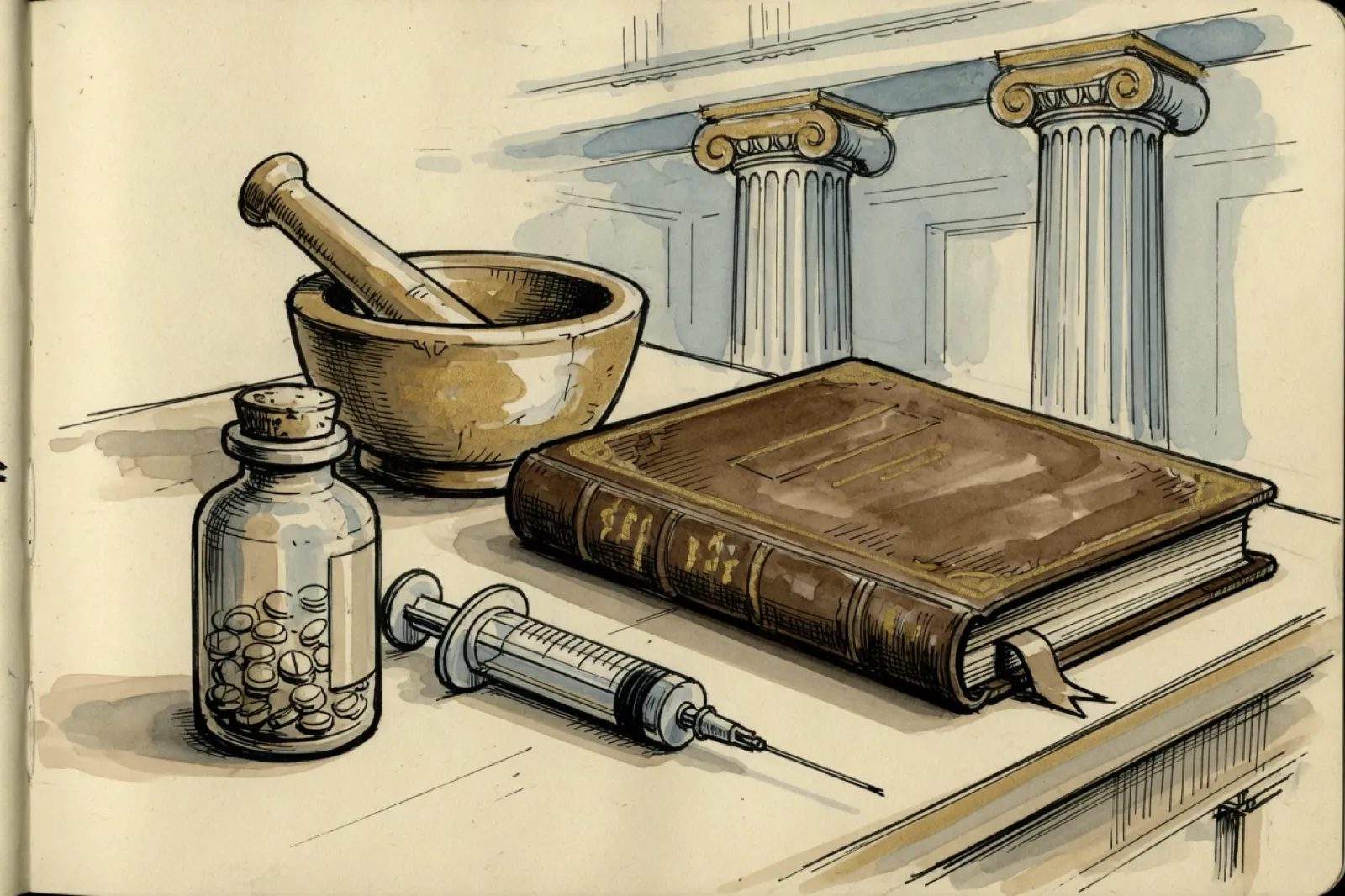
American medicine was built. Somebody wrote the standards, somebody paid for the schools, and somebody decided what would count as real care. I keep going back to that history because it explains a system that is very good at pulling people back from the edge and very bad at keeping them away from it.
The mess Flexner walked into
Around 1900, U.S. medical education was a patchwork. Some schools were serious. Many were proprietary diploma mills with thin labs, weak entrance standards, and uneven clinical training. Patients had little way to tell the difference. Reform was overdue.
In 1910, Abraham Flexner published Medical Education in the United States and Canada under the Carnegie Foundation for the Advancement of Teaching. He was an educator, not a physician, hired to survey the field. He visited roughly 155 schools and judged them against a Johns Hopkins-style model: university affiliation, laboratory science, full-time faculty, and rigorous clinical training.
The report was a Carnegie project. The Rockefeller name enters after the blueprint was already drawn.
Rockefeller money picked the winners
Flexner’s recommendations landed in front of foundations with enough money to enforce them. Rockefeller’s General Education Board (GEB), and later the Rockefeller Foundation, poured large sums into medical schools that matched the scientific, hospital-centered model. Flexner joined the GEB around 1913 and spent years helping run that agenda.
Money is a filter. Schools that looked like the Flexner ideal got capital for labs, full-time professors, and research. The rest often merged, closed, or withered. By the 1920s and 1930s, American medicine had fewer schools, higher barriers to entry, and a clear hierarchy of prestige. The biggest losers were the proprietary schools and the ones teaching homeopathy, eclectic, and other non-allopathic traditions. Osteopathic schools mostly survived by moving closer to biomedical standards.
Online this gets retold as a cartoon. Oil money invents pharmaceutical medicine so it can sell petroleum byproducts. That story is sloppy. What happened is more boring and more useful to know. Industrial wealth, elite foundations, and professional reformers together built a system around laboratory science, hospital care, and treatments that scale as products and procedures. Incentives matter even when nobody is twirling a mustache.
The cleanup worked
I am not nostalgic for 1905.
The Flexner-era cleanup raised baseline competence. The biomedical model that followed produced tools that still save lives: antibiotics, vaccines, sterile surgery, anesthesia, trauma care, imaging, chemotherapy protocols, and ICU medicine. When you have appendicitis, a heart attack, or a serious infection, you want the modern stack.
Licensing, accreditation, and science-based curricula also cut out some of the worst fraud and incompetence of the proprietary era. Setting a floor was worth doing.
Prevention got squeezed out
Every system has a bias. Ours is excellent at spotting pathology and intervening once disease is established. It is weak on nutrition, sleep, movement, stress, environment, and community as first-line care.
Training, reimbursement, and research funding all push the same direction. A curriculum built around labs, drugs, and procedures turns out clinicians who are fluent in labs, drugs, and procedures. Prevention and lifestyle end up as lectures rather than a core skill, and they rarely pay like a procedure or a prescription.
Some of the traditions that died deserved to die. Others carried real empiricism about herbs, manual therapy, diet, and whole-person care, and got branded unscientific because they did not fit the funded model. What narrowed along with them was the definition of what serious medicine is allowed to prioritize.
You can see the result in the culture now. A pill or a procedure for every problem, public health funded like an afterthought next to specialty care, and care that usually starts late, after years of metabolic or lifestyle damage. It is the same lens I use when I write about GLP-1 drugs and the dirty fish tank. Rescue tools matter. Dosing the fish is still not cleaning the water.
Why drug money fits the template
Once medicine is organized around patented treatments, research pipelines, hospital capital, and specialty guilds, commercial influence follows on its own. Drug and device companies fund trials, continuing medical education, guideline-adjacent work, and advertising. The studies are not all fake. The pull happens earlier, in which questions get asked, which endpoints get measured, and which answers get scaled, and all of that leans toward what can be sold.
Philanthropy in the early 20th century and industry in the late 20th and 21st are different animals. What they share is the question of who sets the agenda when money concentrates. Flexner-era foundations built the template of elite, science-heavy medical schools. Commercial medicine later filled that template with blockbuster drugs and high-margin procedures. The shape locked in early and has not moved much since: hospital-centered, intervention-heavy, light on prevention, and easy for industrial capital to move into. If prevention, food, and environment rarely produce quarterly earnings, they will rarely sit at the center of the system.
I do not need a secret cabal to explain that. I need incentives, history, and pattern recognition.
What I’d actually do
I use modern medicine. I also refuse to treat its institutional history as sacred.
Keep the rescue tools. Antibiotics, vaccines, surgery, and emergency care are not the villains here, and when the problem is acute and the evidence is strong, use them. Save the skepticism for the layer above, for guidelines, ads, and one-size protocols. Question those, and ask out loud who funded the trial and who paid the people writing the recommendation. Leave the oil-byproduct folklore alone. It explains less than the money does, and it makes you easy to ignore. Incentives, evidence quality, and outcomes are enough to argue with.
Then put prevention back in the first chair. Food, sleep, movement, stress, relationships, and environment are the tank. They are not the complementary extras you get to after the script pad. That is hard to pull off in a 12-minute appointment built to end in a diagnosis and a prescription, which will undervalue root-cause work every time. So show up with your own material: written questions, labs, whatever lifestyle data you keep. Push until the decision is genuinely shared.
Public funding for research, open methods, and fewer conflicts of interest among the people who write guidelines will not purify medicine. They make capture harder. That is worth asking for.
Sources
- Flexner, A. (1910). Medical Education in the United States and Canada. Carnegie Foundation for the Advancement of Teaching (Bulletin No. 4). Archive / Carnegie Foundation materials.
- Rockefeller Archive Center. Early 20th Century Reforms of Medical Education Worldwide (Flexner, GEB, and Rockefeller Foundation roles).
- Duffy, T. P. (2011). The Flexner Report ― 100 Years Later. Yale Journal of Biology and Medicine, 84(3), 269–276. https://pmc.ncbi.nlm.nih.gov/articles/PMC3178858/
- Philanthropy Roundtable. Modern American Medical Education (Rockefeller/GEB funding of Flexner-aligned schools).
- Wikipedia overview (for orientation, not as primary authority): Flexner Report; General Education Board.